



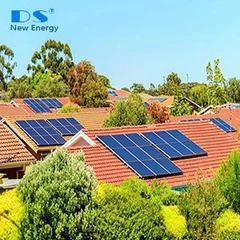


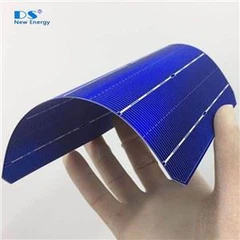
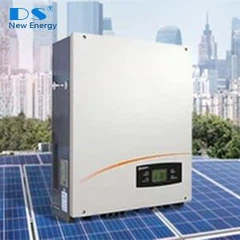

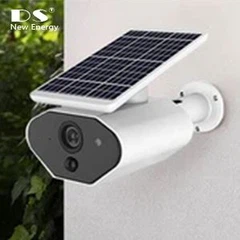
The increasing adoption of photovoltaic (PV) systems in residential, commercial, and industrial applications necessitates a thorough understanding of different types of electrical loads-capacitive, inductive, and resistive-that interact with these systems. This paper provides an in-depth analysis of these load types, their characteristics, impacts on PV system performance, and comparative evaluations. Special emphasis is placed on user-side loads in PV applications, including their effects on power quality, efficiency, and system stability. The discussion also covers mitigation strategies for optimizing PV system performance under varying load conditions.
Photovoltaic (PV) systems are increasingly integrated into modern power grids, particularly at the user side, where they supply electricity to residential, commercial, and industrial consumers. The efficiency and stability of PV systems depend significantly on the nature of the connected loads. Electrical loads can be broadly categorized into three types:
Each load type interacts differently with PV inverters, affecting power quality, efficiency, and system reliability. This paper explores these interactions in detail, providing a comparative analysis and recommendations for optimal PV system design.
Resistive loads are the simplest type, where the current and voltage are in phase. They consume real power (P) and do not introduce reactive power (Q).
Power Factor (PF)=1 (Unity power factor).
No phase shift between voltage and current.
Efficiency: High, since no reactive power is involved.
Stability: Minimal impact on PV inverters, as they provide a stable, linear load.
Harmonics: Negligible, unless non-linear resistive loads (e.g., dimmers) are present.

Heating appliances (electric water heaters, electric heaters, electric blankets, hand warmers, electric ovens, electric irons, curling irons, etc.)

Low-power electrical appliances (chargers, electric fans, etc.)


Office equipment (heating components (resistance wire heating) of some old-fashioned printers and copiers)


Inductive loads introduce a phase lag, where current lags behind voltage due to the inductive reactance (XL=2πfL).
Power Factor (PF) < 1 (Lagging).
Reactive power consumption (Q=VI sinφ).
Efficiency: Reduced due to reactive power losses.
Stability: Can cause voltage drops and power fluctuations.
Harmonics: May introduce harmonics if non-linear (e.g., variable frequency drives).
Power Factor Correction (PFC) capacitors to compensate for lagging PF.
Use of active filters to mitigate harmonics. Classification of User-Side Inductive Loads
Household appliances (refrigerator compressors, air conditioner compressors and fan motors, washing machine motors, microwave oven turntable motors, range hood motors, etc.)

Industrial and commercial equipment (water pump motors (agricultural irrigation, water supply systems), fans (ventilation, heat dissipation), conveyor belt motors, machine tool motors, elevator drive motors, etc.)

Small equipment (electric tools (such as electric drills, cutting machines), treadmill motors, cooling fan motors inside electric vehicle charging piles, etc.)


Induction cooker/induction cooker (Utilizing a coil to generate an alternating magnetic field, causing the cookware to heat up. The core component is the heating coil)


Capacitive loads introduce a phase lead, where current leads voltage due to capacitive reactance (XC=1/(2πfC)).
Power Factor (PF) < 1 (Leading).
Reactive power generation (Q=VI sinφ).
Efficiency: Can improve efficiency if used for PFC, but excessive capacitance can cause overvoltage.
Stability: May lead to resonance issues with grid inductance.
Harmonics: Can amplify harmonics if improperly designed.
Proper sizing of PFC capacitors.
Use of harmonic filters.
The DC side capacitor of the frequency converter/inverter (the DC bus of equipment such as photovoltaic inverters and variable frequency drives (VFDS) is usually equipped with large-capacity electrolytic capacitors to smooth the DC voltage and suppress ripple)


Electronic instruments (printers, copiers, microwave ovens (some models), televisions (especially LCD TVS, which have a large number of capacitors on the internal power board), etc.)


User-Side Load Considerations in PV Systems
|
|
|
|
|
|
|
1 (Unity) |
<1 (Lagging) |
<1 (Leading) |
|
|
0 |
|
|
|
|
|
|
|
|
|
|
|
|
|
|
|
Medium (if non-linear) |
Medium-High |
|
|
|
|
|
|
|
|
|
|
PV systems at the user side must handle a mix of resistive, inductive, and capacitive loads. Key challenges include:
Voltage fluctuations due to sudden inductive load switching.
Harmonic distortion from non-linear loads (e.g., inverters, LED drivers).
Reactive power imbalance affecting grid stability.
Maximum Power Point Tracking (MPPT) must account for varying load types.
Inverter sizing should consider peak reactive power demands.
Islanding risks if PV systems cannot match load demand.
Frequency instability due to excessive capacitive loads.
Active Power Factor Correction (PFC): Use inverter-based reactive power compensation.
Harmonic Filters: Install passive/active filters to mitigate distortions.
Smart Load Management: Prioritize resistive loads during low PV generation.
Energy Storage Integration: Batteries can buffer reactive power demands.
Understanding the behavior of capacitive, inductive, and resistive loads is crucial for optimizing PV system performance at the user side. While resistive loads are the most straightforward, inductive and capacitive loads introduce complexities such as reactive power, harmonics, and stability challenges. Proper mitigation strategies, including PFC, harmonic filtering, and smart load management, are essential for efficient and reliable PV integration.
Photovoltaic (PV) Systems, User-Side Loads, Capacitive Loads, Inductive Loads, Resistive Loads, Power Factor (PF), Reactive Power (Q), Real Power (P), Phase Shift, Harmonic Distortion.


